

Your Guide to Balinese Arts and Culture
For many Australians, a Bali holiday is synonymous with world-class surf, vibrant beach clubs, and sunset Bintangs. However, look beyond the coastline and you will find the “Island of the Gods” is a living gallery of ancient traditions and spiritual expression. Balinese culture is not something merely performed for tourists; it is the heartbeat of everyday life, woven into every street corner and morning ritual.
Understanding the deep connection between religion, community, and the arts will transform your trip from a simple beach break into a truly meaningful journey. Whether you are staying in one of the artistic hubs or the bustling coastal strips, our Bali holiday packages make it easy to immerse yourself in the local way of life.
The Rhythm of the Island: Traditional Dance and Music
Traditional Balinese dance is perhaps the most captivating expression of the island’s Hindu-Balinese heritage. These performances are elaborate storytelling rituals that depict the eternal struggle between good and evil.
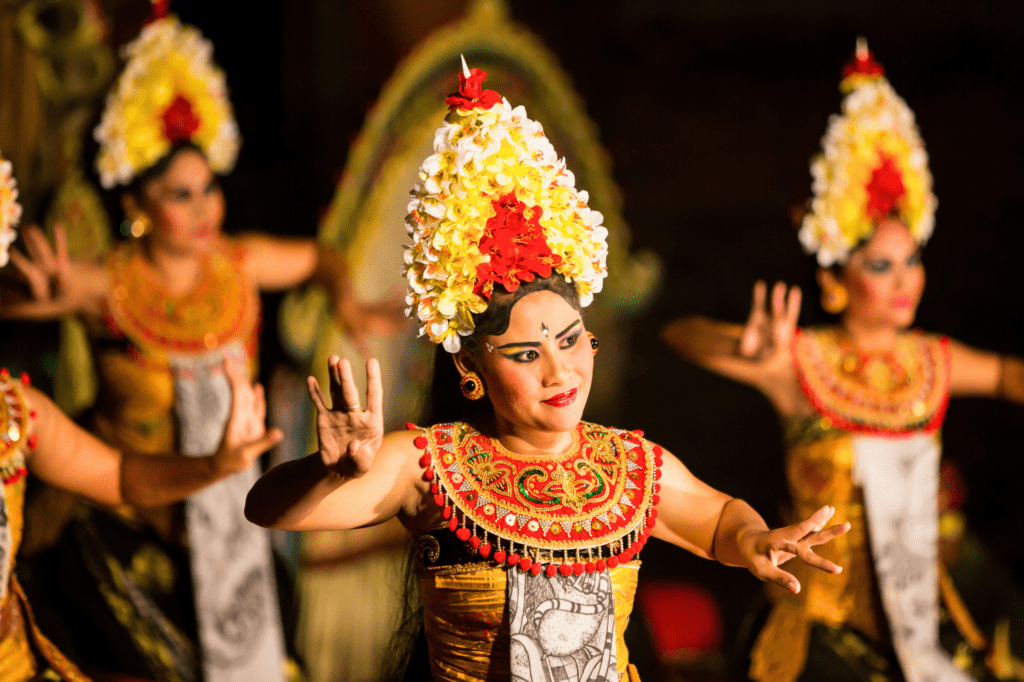
If you visit our Ubud Destination Guide, you will see that the town is the cultural heartland for these performances. To truly appreciate the spectacle, it helps to understand the distinct origins and stories behind the most iconic dances:
- The Kecak Fire Dance: Often called the “Ramayana Monkey Chant,” this is perhaps the most dramatic performance you will witness. Unlike other dances, Kecak does not use instruments. Instead, its “orchestra” is a choir of fifty or more bare-chested men who sit in concentric circles, swaying and chanting a rhythmic “cak-cak-cak.” Developed in the 1930s, this dance depicts the epic battle where Prince Rama, aided by Hanuman’s monkey army, rescues Princess Sita from the 10-headed demon king Ravana. The performance usually culminates in a breathtaking fire walk, symbolising spiritual protection.
- The Legong Dance: Historically performed for royalty, the Legong is considered the most graceful and refined of the Balinese dances. It originated in the 19th century as a royal court entertainment, performed by young girls who undergo years of rigorous training from a very young age. The dance is famous for its complex finger movements, sharp head pivots, and “seledet” (expressive eye movements).
- The Barong and Rangda Dance: This is a classic “good vs. evil” narrative that plays a vital role in Balinese spiritual life. The Barong is a lion-like creature representing the King of the Spirits and the protector of the village. His rival, Rangda, is the “Demon Queen” or the “Widow Witch.” This dance-drama represents the eternal struggle between order and chaos. In Balinese culture, it is believed that neither side ever truly “wins”—instead, the goal is to maintain a balance between the two forces. The performance features masked dancers wielding kris daggers in a trance-like exchange.
Gamelan music accompanies most of these performances. This traditional ensemble of percussion instruments, including bronze gongs, drums, and metallophones, produces a shimmering, layered sound that feels both ancient and ethereal. It is the literal heartbeat of the island, and once you hear it, you will forever associate its resonance with your Bali holiday.
Interactive Art Experiences
For travellers who want to go deeper than just watching, Bali offers an incredible array of Bali cultural experiences through hands-on workshops. Engaging with a local artist is one of the best cultural things to do in Bali to truly understand the patience and skill required for these crafts.
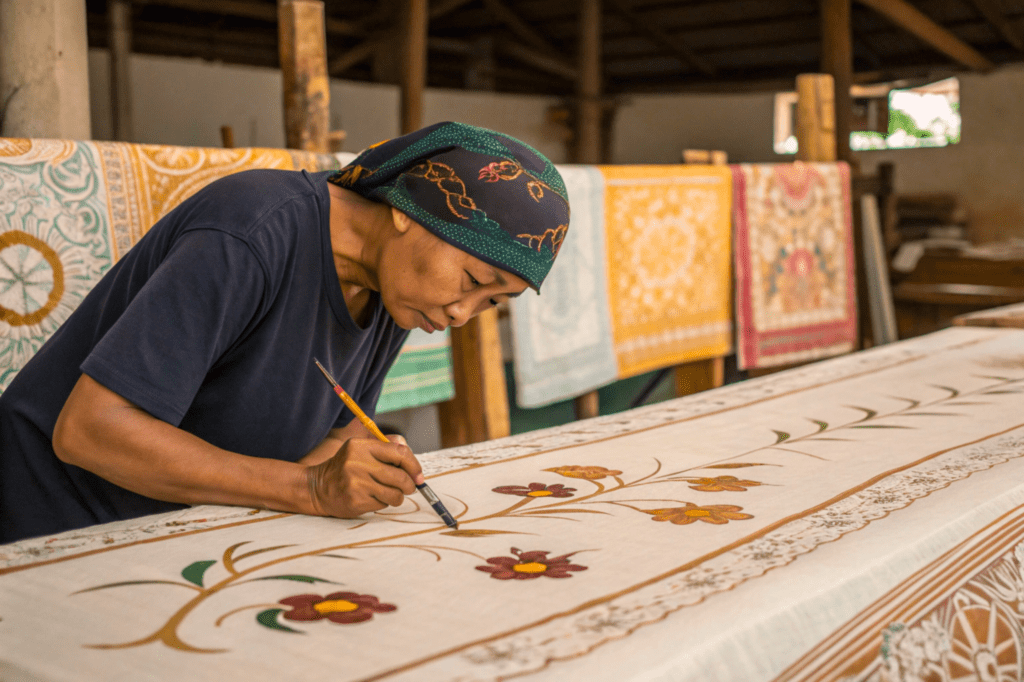
In the villages surrounding Ubud, you can join a batik painting class. Here, you will learn to use wax and dye to create intricate patterns on fabric. Alternatively, you might try a wood carving workshop, where master carvers show you how to transform a block of hibiscus wood into a detailed mask or deity. If you have a musical ear, gamelan lessons are also available, allowing you to learn the communal timing required to play in a traditional orchestra.
Balancing Tradition with Modernity in Seminyak
While the highlands provide a deep dive into heritage, you don’t have to head to the jungle to feel the island’s pulse. As outlined in our Seminyak Destination Guide, the coastal areas offer a sophisticated, cosmopolitan take on the island experience. Seminyak is the hub for luxury resorts, high-end boutiques, and an incredible world-class dining scene known locally as “Eat Street.”
Even amidst the chic beach clubs and vibrant nightlife, culture remains present. You can visit Pura Petitenget, a centuries-old sea temple that hosts spectacular beachside ceremonies, proving that Balinese traditions thrive even in the most modern settings.

Sacred Spaces: Visiting Temples and Observing Ceremonies
Religion is the pillar of Balinese society. When visiting temples in Bali, you are stepping into a sacred space that serves as the centre of village life. You will notice “Canang Sari” everywhere. These are the small daily offerings made of palm leaves and filled with colourful flowers, incense, and crackers, placed on the ground and at shrines to thank the Creator.
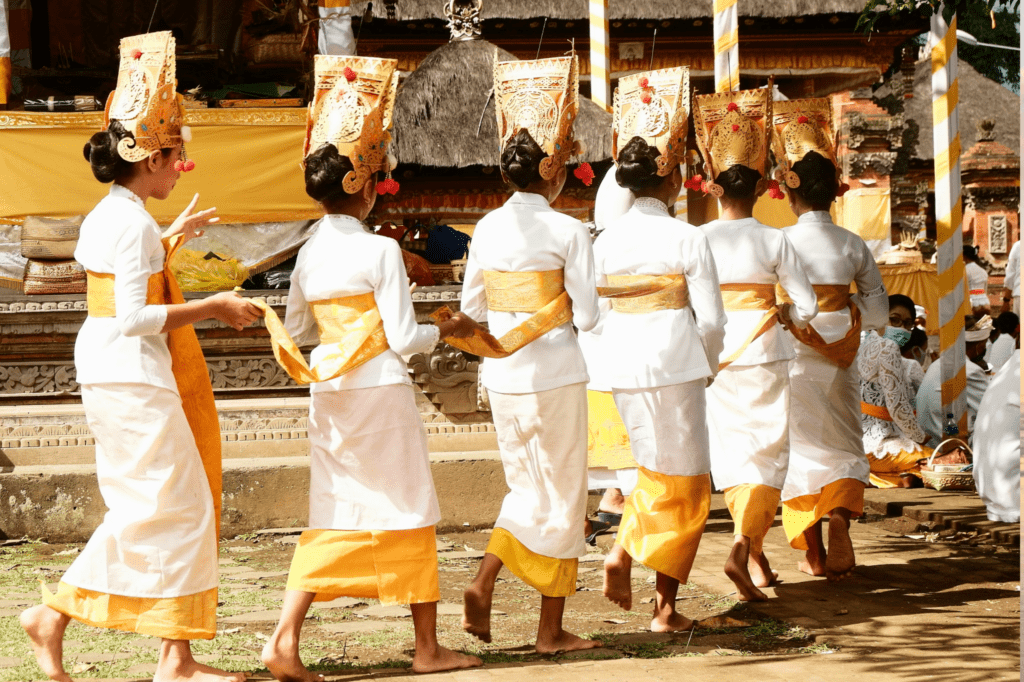
If you are lucky, your trip might coincide with an Odalan, which is a temple’s anniversary celebration. These festivals turn the temple grounds into a sea of white traditional clothing, towering fruit offerings, and non-stop music. It is a spectacular sight, but it is also a deeply religious moment that requires visitors to be mindful and respectful of the spiritual significance.
Bali Temple Etiquette: The Do’s and Don’ts
To ensure you are a respectful guest, following Bali temple etiquette is essential. Whether you are at a major site like Besakih or a small village shrine, these rules apply:
- Dress Modestly: This is the golden rule. Both men and women must cover their shoulders and knees.
- The Sarong is Essential: Even if you are wearing long pants, you are usually required to wear a sarong and a sash around your waist inside temple walls. Most major temples have these for hire at the entrance.
- Watch Your Step: Be incredibly careful not to step on the Canang Sari offerings on the ground. They are placed there with prayer and intent.
- Height Matters: Never stand higher than the priest or a person in prayer. If people are sitting on the ground to pray, you should not stand above them.
- Ask Before Snapping: While most Balinese are happy for you to take photos, always ask permission before photographing people in prayer and never use a flash during a ceremony.
- Maintain Silence: Keep your voice low and remain quiet and respectful during ceremonies.
Experience the Real Bali with Hoot Holidays
The true magic of Bali is found when you slow down and embrace its cultural soul. Whether you’re drawn to the artistic workshops of the interior or the sophisticated energy of the coast, the island’s heritage is what makes every visit so unforgettable.
At Hoot Holidays, we specialise in Bali travel packages that offer the best of both worlds. Our all-inclusive options allow you to enjoy the comfort of a luxury resort by night, while giving you the freedom to explore authentic cultural moments by day. By bundling your flights, transfers, and accommodation, we take the stress out of the logistics so you can focus on connecting meaningfully with this incredible island.